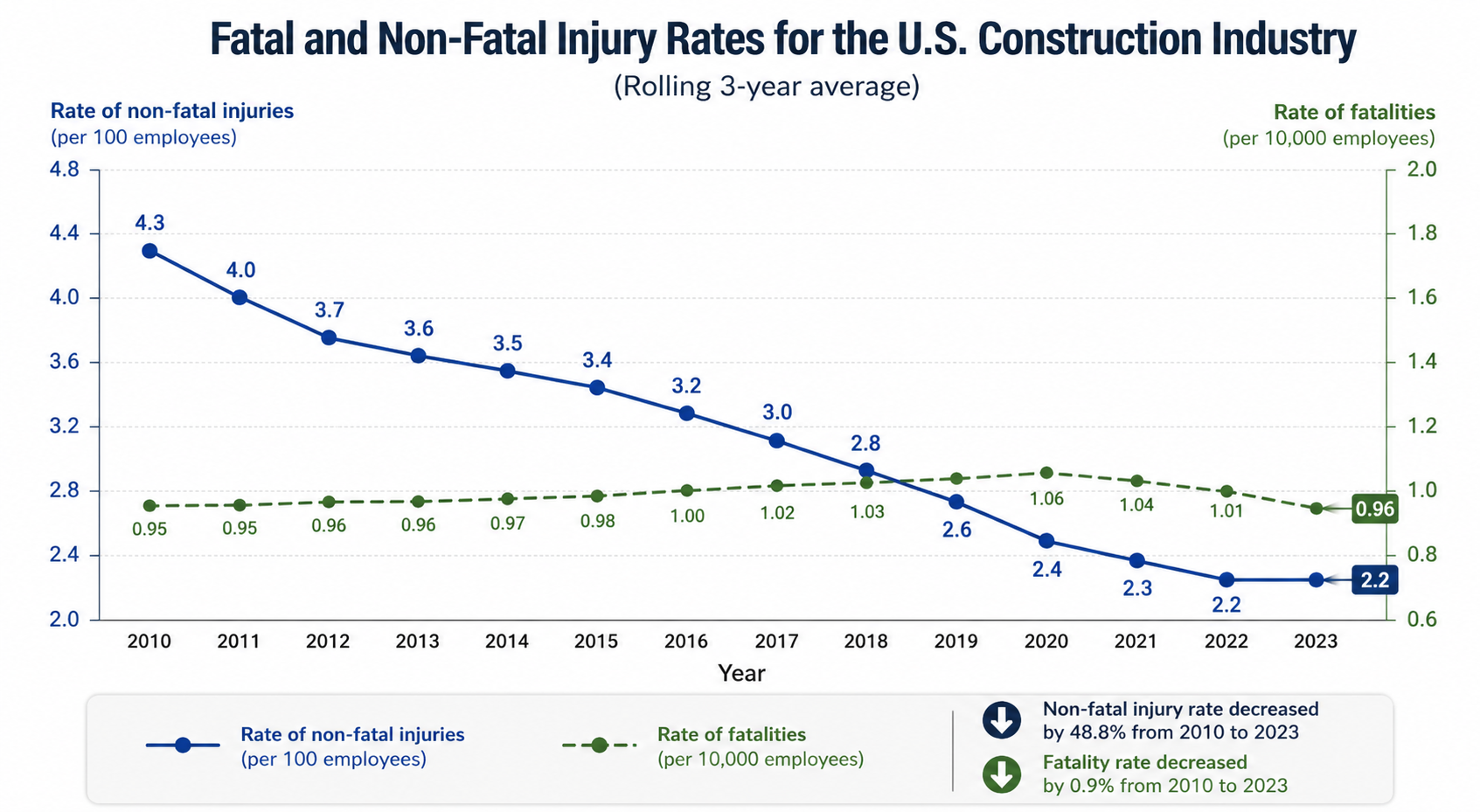
For years, many organizations have judged safety performance by looking backward. Recordable rates. TRIF. Lost-time counts. Those numbers still have a place, but they do not answer a more important question: are workers protected from the hazards most likely to cause serious injury or fatality? OSHA makes a similar distinction in its guidance on leading indicators, noting that lagging indicators show what has already happened, while leading indicators indicate whether safety activities are effective in preventing incidents.
That is why more safety leaders are shifting the conversation from incident metrics alone to control effectiveness.
This shift is not theoretical. It is being shaped by collaboration among researchers, industry leaders, and major market participants. The Construction Safety Research Alliance (CSRA) is an alliance of industry leaders and experienced scientists focused on eliminating serious incidents and fatalities through defensible research. EEI’s HECA guidance says the method was first introduced through a CSRA project and built on both energy-based safety research and EEI’s direct-control framework.
In practical terms, this is where High Energy Control Assessments, or HECAs, enter the picture.
HECA is a way of measuring whether workers are adequately protected from life-threatening, high-energy hazards. EEI defines it as the percentage of high-energy hazards that have a corresponding direct control. In other words, it is not just asking whether a hazard was identified. It is asking whether the right safeguard was actually in place.
HECA=SuccessSuccess+Exposure
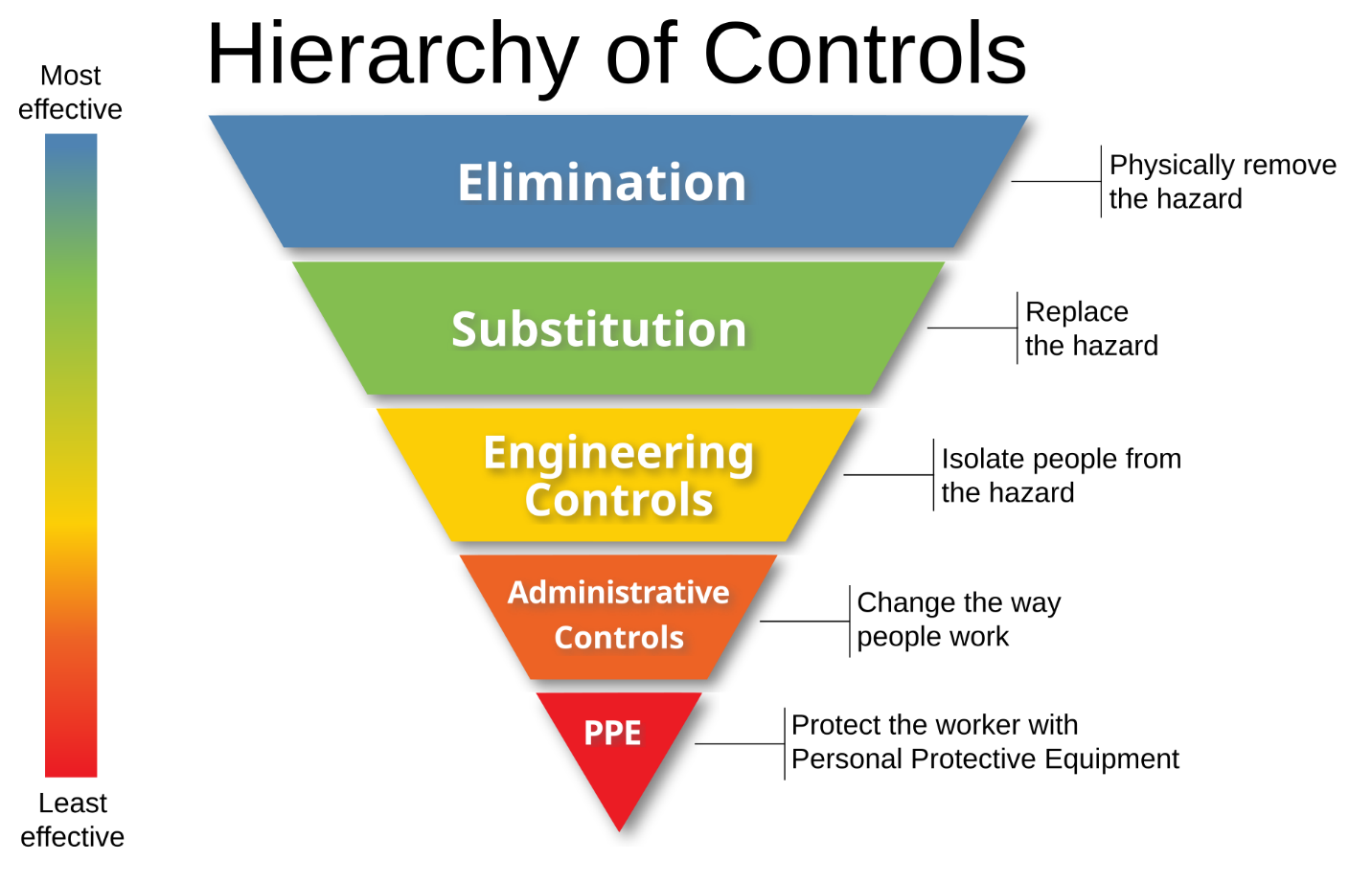
That idea matters because not all controls offer the same level of protection. A warning sign, a procedure, or personal protective equipment may all play an important role, but they do not provide the same protection as a barrier, an isolation step, a lockout, or another control that physically prevents exposure. CDC and NIOSH make this same point through the hierarchy of controls, which prioritizes elimination, substitution, and engineering controls because they are generally more effective than controls that rely primarily on worker behavior.
EEI’s HECA framework says a direct control must meet three tests.
That last point is especially important because serious incidents rarely happen only because someone failed to follow a rule. They often happen because the safeguard itself was not strong enough to tolerate normal human error.
This is also where HECA and FLHAs belong in the same conversation.
A field-level hazard assessment remains one of the most important moments in the workday. It is where crews stop, assess the task in front of them, identify hazards, and talk through controls before work begins. As we wrote earlier this year, FLHAs are the backbone of workplace safety in dynamic field environments because they help make risk visible before the task starts.
Related Content: Field Level Hazard Assessments: Where Safety and Technology Converge
HECA does not replace that process. It strengthens it.
An FLHA helps identify what could go wrong under real-world conditions. A HECA mindset pushes the team one step further by asking whether the highest-consequence hazards, such as energized systems, line-of-fire exposures, suspended loads, stored pressure, rotating equipment, or work at height, are backed by controls that are truly protective. That is a more useful question than simply asking whether the form was completed.
It is also a more useful way to think about safety performance.
In the peer-reviewed article that introduced HECA as a new performance metric, Elif Deniz Oguz Erkal and Matthew Hallowell argue that the prevailing recordable-rate approach is “statistically and philosophically flawed.” Their point is not that lagging metrics should disappear. It is that they were never designed to tell us whether critical safeguards were present when high-energy hazards were in play.
The National Safety Council makes a similar point in even more practical terms: “The best leading indicators don’t just measure activity, they assess whether risk is being effectively controlled.” That is the heart of the HECA conversation. Safety leaders are not just asking whether observations were completed, meetings were held, or forms were submitted. They are asking whether the work was protected by controls that could actually prevent serious harm.
For organizations with lone and at-risk workers, this matters even more. These workers are often farther from immediate help, more exposed to changing field conditions, and more dependent on strong planning before the job begins. In those environments, the quality of the control matters as much as the presence of the hazard. A completed form may document the work. A strong FLHA process, supported by HECA thinking, can help prevent the serious event that never shows up in an incident report.
There is another reason this shift matters: data.
When FLHAs and related control information are captured in a structured way, organizations can do much more than archive paperwork. They can identify where high-energy hazards appear most often. They can see whether certain tasks rely too heavily on administrative controls. They can spot repeated gaps in direct controls, recurring exposures, or patterns that deserve redesign, retraining, or closer supervision. In the report cited earlier, OSHA says leading indicators can reveal potential problems in a safety and health program and help drive change before incidents occur. That is exactly where stronger analytics become valuable.
Metrics matter, but only if they focus people on the right problem. HECA is useful not just because it gives safety teams another score. It is useful because it helps shift attention toward the conditions, decisions, and safeguards that determine whether workers go home safe.
The takeaway is simple. Whether your organization talks about TRIF, TRIR, or total recordable rate, lagging indicators still have value. But they are no longer enough on their own. The stronger question is this: when high-energy hazards are present, do we know the right controls are in place, and do we have the data to prove it?
That is where the industry conversation is heading. And for organizations responsible for lone and at-risk workers across North America, it is a conversation worth having now.
Traditionally, hazard assessments and control verification have been completed on paper. While this captures important information, it can limit visibility across teams and worksites.
Digital safety platforms can enhance HECA processes by enabling organizations to:
These insights help organizations move beyond reactive safety and toward data-driven risk prevention.
If your organization is rethinking how it approaches field risk, it may be time to look not only at what has happened, but at how effectively critical hazards are being controlled before work begins. Our earlier post on FLHAs explores that field-level foundation in more detail.
What is a HECA score?
A HECA score measures the percentage of high-energy hazards that have a corresponding direct control in place. EEI describes it as a way to measure the extent to which front-line workers are protected against life-threatening hazards.
How is HECA different from an FLHA?
An FLHA helps identify hazards and discuss controls before work begins. HECA adds a more focused test for high-energy hazards by asking whether the controls in place are specifically targeted, effective, and resilient to human error.
Why are safety leaders moving beyond TRIF and other lagging indicators?
OSHA says lagging indicators show what happened in the past, while leading indicators help organizations see whether safety activities are effective at preventing incidents. HECA is part of that broader move toward more preventive, control-based measurement.
Why does this matter for lone and at-risk workers?
These workers often operate in changing conditions and farther from immediate support, so the quality of controls and the strength of task planning become even more important.