

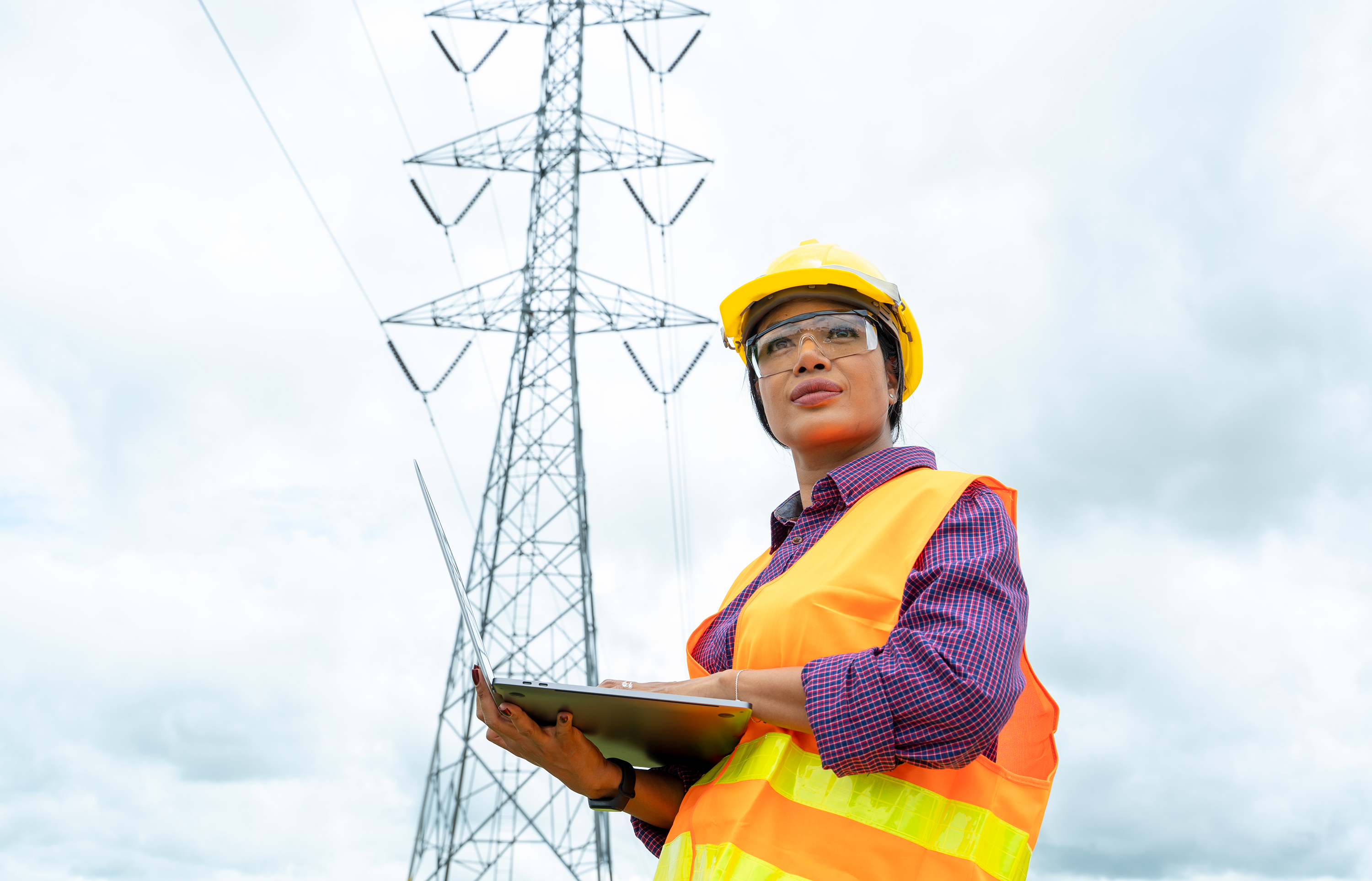
What predictive lone worker safety looks like in practice: hotspots, context-aware alerts, and human-in-the-loop AI inside Field Safe.
Lone worker safety has traditionally been built around response: missed check-ins, alerts, and escalation workflows designed to get help moving fast when something goes wrong. That lifeline matters, and it always will. But with today’s volume of digital field signals, safety leaders can do more than respond. They can anticipate.
Predictive safety is the practical next step. It doesn’t claim to predict the exact moment an incident will happen. Instead, it helps teams see where risk is elevated today, based on leading indicators such as check-in patterns, journey conditions, recurring hazards, control effectiveness, near misses, and environmental context. When those signals cluster, AI can flag emerging hotspots and give supervisors a prioritized view of what needs attention first.
In this second part of our series, we’ll break down what that looks like in real operations: how AI models identify risk hotspots across routes, sites, and job types; how geofencing can deliver location-specific safety intelligence in the moment; and how Field Safe is building AI into a connected worker platform to help teams act sooner—without adding admin or sacrificing trust and privacy.
AI models can scan years of check-ins, journey logs, incidents, and corrective actions to spot patterns fast:
According to Safety Inc., in its article “AI-Powered Workplace Safety: How Predictive Analytics and Wearables Can Prevent Accidents," by combining environmental data (like weather and remoteness), task type, worker history, and equipment information, predictive analytics can estimate where risk is elevated on any given day.
That doesn’t mean predicting the exact moment of an incident. It means giving HSE leaders a prioritized view of risks that require closer attention.
Now that you have identified areas of elevated risk, you can use AI to create more intelligent workflows.
As field workers travel between job sites, geofencing and AI combine to proactively protect them by offering real-time, location-specific safety intelligence. Using predefined geofenced zones around assets, facilities, easements, or high-risk areas, the system automatically detects when a worker enters a zone and evaluates the conditions at that location.
For example, when a worker approaches a regulator station, pipeline ROW, or active construction area, the AI engine pulls from historical hazard submissions, recent high-energy events, weather feeds, and equipment status reports. If the area has a history of pressure-related incidents, elevated line strike risk, or recent wild life activity, the system instantly pushes a mobile alert such as:
“Caution: You are entering a high-risk zone. Previous incidents in this area include pressure releases and excavation hazards. High winds were reported within the last 60 minutes. Additional controls are recommended.”
This approach converts safety from passive to predictive. Instead of relying on workers to remember past site concerns or wait for updated safety briefings, the system delivers context-aware alerts at the exact moment they are needed, helping ensure at-risk workers are better prepared as they arrive on site.
Field Safe Solutions is already a connected worker platform: we digitize lone worker monitoring, journey management, safety forms, and corrective actions into a single system. Here are four ways we are integrating AI to improve the safety of lone and at-risk workers.

Related Video: Operational Efficiency
1. Building on a Strong Data Foundation
Our mobile app integrates with the wearables workers use in the field, such as the Apple Watch, to deliver health and safety notifications. This allows us to capture rich, time-stamped data about:
That data gives AI a liable source of learning, and it also makes Field Safe more valuable day today. The more complete and consistent the data, the easier it is for our solution to surface leading risk signals, spot repeat hazards or weak controls, and help supervisors prioritize prevention actions early, without adding excess paperwork for workers.
2. Moving from Lagging to Leading Indicators to Measure Risk
Field Safe is also focused on helping safety teams move beyond TRIR and other lagging indicators. Through conversations with our clients, we heard a consistent challenge: traditional dashboards often explain what happened last month, but they do not reliably show where risk is building today. That insight, combined with learnings from sector specialists and current research, is forming our approach to AI as a practical tool to strengthen leading indicators, identify rising exposure, and improve prevention.
One of the clearest examples of this shift is the CSRA work mentioned earlier, led by Executive Director Dr. Matthew Hallowell. Their research has appealed to many safety leaders because it questions a long-standing assumption that many organizations still treat as the scoreboard for safety performance: TRIR (Total Recordable Incident Rate).
CSRA’s “Tyranny of TRIR” work explains how TRIR has dominated safety performance conversations for nearly 50 years, yet can be misleading when used to compare teams, projects, or companies. Their research argues TRIR is often statistically invalid as a comparative metric and shows no discernible association between TRIR and fatalities, meaning you can “improve TRIR” without necessarily reducing exposure to the events that matter most.
From there, CSRA points the industry toward alternatives: metrics and methods that better reflect prevention, control effectiveness, and serious-injury-and-fatality exposure.
This ties directly back to the core promise of AI in safety: it’s not just analyzing what happened, it's helping leaders see risk building earlier by learning from leading-indicator data (hazards, controls, near misses, and work conditions) before harm occurs.
Hazard + Controls Intelligence
Once you digitize field-level hazard assessments and controls, AI can help safety teams move from“forms filed” to “signals learned.” The goal is to surface trends like recurring hazard types, weak or missing controls, or sites where risk conditions are changing faster than normal. CSRA’s work on Quality of Safety Leading Indicators reinforces this idea: measuring the quality of safety activities (not just whether they happened) is a stronger path to meaningful prevention.
Over time, this becomes a practical leading-indicator engine that helps teams improve hazard recognition and strengthen controls before an incident.
Field Safe is bringing this approach into our platform by using AI to turn day-to-day field data, such as hazard reports, FLHAs, near misses, check-ins, and corrective actions, into leading risk signals, so HSE teams can spot rising exposure earlier and take action before an incident happens.
Related Content: FLHAs: Where Safety and Technology Converge
3. Smarter Prioritization for Lone Worker Prevention
AI can combine journey plans, check-in patterns, location context, and operating conditions (like weather/road risk) to give supervisors a simple daily view of where risk is elevated and what needs attention first: extra check-ins, adjusted timing, added controls, or a different route. That’s how AI supports prevention without flooding teams with more admin.
Field Safe makes this practical by bringing together lone worker monitoring, journey management, and digital safety workflows into a single, easy-to-use mobile app, so workers have fewer tools to juggle, and supervisors can see the full picture in one place. With everything captured in real time and tied to the same worker, task, and location, it becomes much easier to act early and apply the right controls.
4. Human in the Loop, Always
AI will never replace competent safety professionals. Instead, Field Safe strives to leverage it to:
We also recognize that persistent monitoring can raise valid privacy and trust questions. In its article “The Role of AI in Predicting Workplace Hazards and Preventing Accidents,” the HSE Network advises that responsible AI in safety means being transparent about what’s being tracked, why it’s being tracked, and how it benefits workers, rather than using it as a disciplinary tool.
Field Safe safeguards privacy through tight data governance (SOC-2 Compliance), encryption of all data in transit and at rest, role-specific access controls, and secure data hosting on AWS, making certain that only authorized users can access the minimum information required for their work while fully complying with industry and statutory standards.
What AI-Powered Safety Means for HSE Leaders
For leaders responsible for lone and remote workers, AI-powered safety isn’t about chasing a buzzword. It’s about strengthening the fundamentals you already care about:
Field Safe’s vision is simple: combine a strong safety culture with modern, AI-powered tools so that every lone worker is connected and has a digital safety net around them, one that can see risk coming and help the team act sooner.
If you’d like to explore what AI could do with your existing safety data, we’re ready to have that conversation.
Part 2 FAQ
About the Author:

Doug Junor has been driving business transformation across North America for more than 35 years, helping organizations spot and act on emerging innovations that challenge the status quo. Clients value Doug’s ability to translate new technology into practical strategies that create operational and competitive impact.
Previously, Doug served asChief Business Officer at Robots & Pencils, an award-winning mobile development firm, where he oversaw digital initiatives across multiple industries and led digital transformation work long before it had a name. Doug also brings his experience into the classroom, having developed and delivered programs through SAIT’s School of Advanced Digital Technology, including Transformational Leadership for Executives and Digital Strategy and Leadership.
Follow Doug on LinkedIn: https://www.linkedin.com/in/dougjunor/