Winter is already here across much of North America; if you haven’t already implemented measures to protect your at-risk workers, you’re overdue.
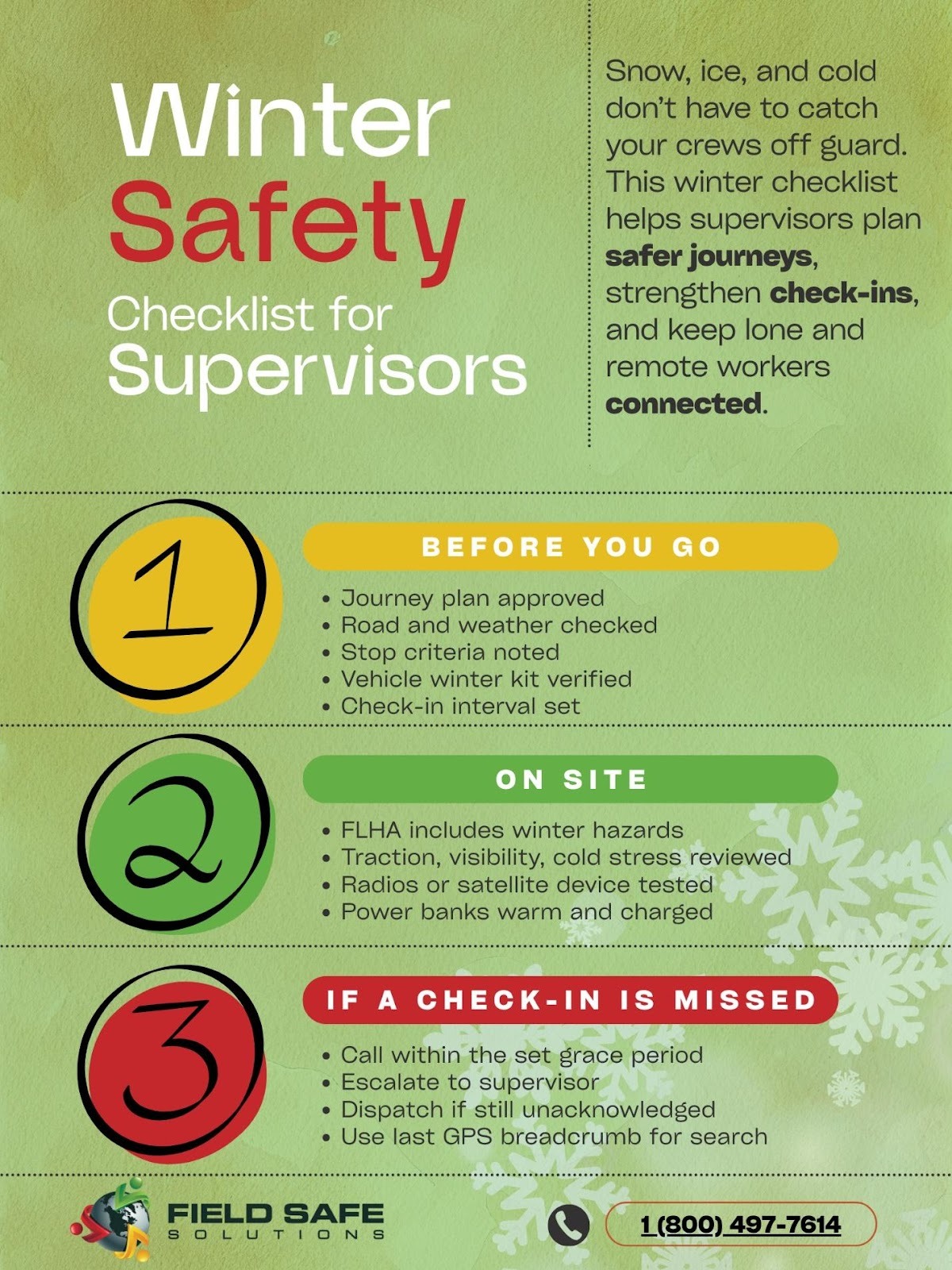
Winter increases slips, vehicle incidents, cold stress, and delayed rescue for lone and remote workers. The good news is that you can reduce these risks by combining a strong safety culture with a digital health and safety app for location-aware check-ins and alerts, and proven controls such as journey management, weather-based stop criteria, and pre-shift check-ins.
In the United States, about 1,300 deaths and 116,800 injuries each year occur on snowy, slushy, or icy roads.
In Canada, environmental factors like adverse weather and slippery roads contribute to roughly one in five fatal collisions.
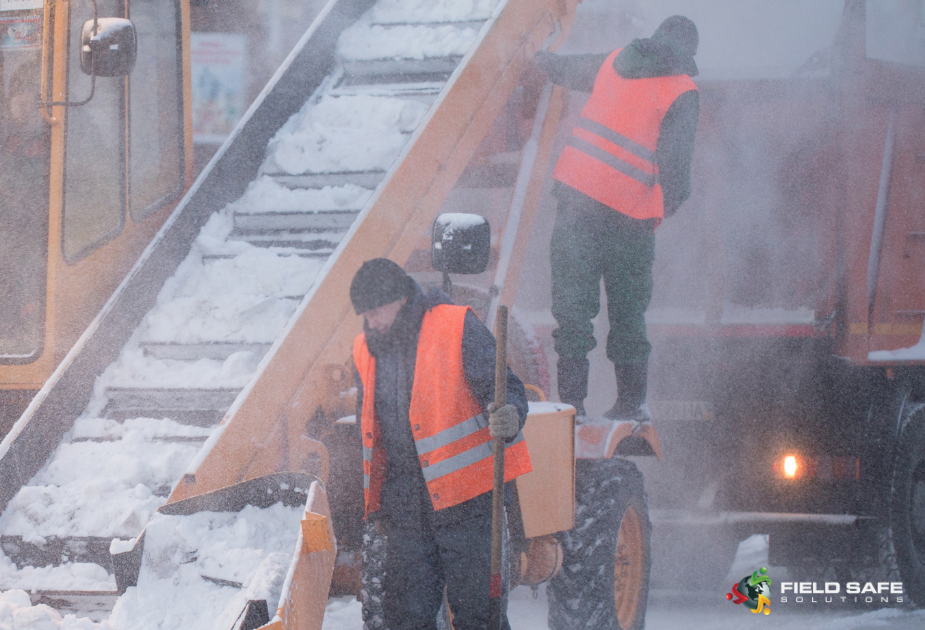
Snow, ice, wind, and low visibility turn what might be ordinary jobs in the summer into high-consequence work, especially for lone and remote field workers who are more at risk. Scan these six buckets before each job or trip, and you will catch many winter surprises.
It started as an errand that should have taken just a couple of minutes. A remote worker at an oil and gas site pulled over, popped the hood of his truck, and reached for the washer fluid. It was about −30 °C and he left his phone in the cab. The extreme cold had stiffened the hydraulic hood hinges and when he leaned in, the hood snapped shut and caught his coveralls. One arm pinned, no one in sight, no way to call for help.
Fortunately, this story has a happy ending. The worker stayed calm and managed to wriggle free. This time, luck and composure were on his side. But he also had a second layer of protection that did not rely on luck at all: a digital lone-worker program. If he had not freed himself, a missed check-in would have triggered alerts, escalated to a supervisor, and sent help to his location using GPS breadcrumbs.
Set simple, non-negotiable expectations and make them visible in the field.
How can digital tools reduce winter risk? By shortening discovery and response time through location-aware check-ins, automatic escalation, GPS breadcrumbs, offline forms, weather-linked alerts, and analytics.
Doug Junor, Field Safe’s VP of Innovation, cautions that an app alone is not enough. Doug says, “Digital tools are essential but do not replace culture. They help instill the right habits faster and more consistently. Crews still need to pause, scan winter hazards, and follow the plan. An effective app makes those steps simple and repeatable, and it makes missed check-ins visible so someone acts in minutes, not hours.”
Look for a digital solution with these capabilities at a minimum:
Offline FLHAs and inspections.
Field Safe supports all of the above with lone-worker monitoring, GPS breadcrumbs, offline forms, and configurable alerts. The outcome is shorter discovery and faster response when conditions are at their worst. Related Video: Intro to Field Safe Solutions
What policies should be in place? A few disciplined habits change outcomes all winter. Make it a priority to ensure you have implemented these recommendations.
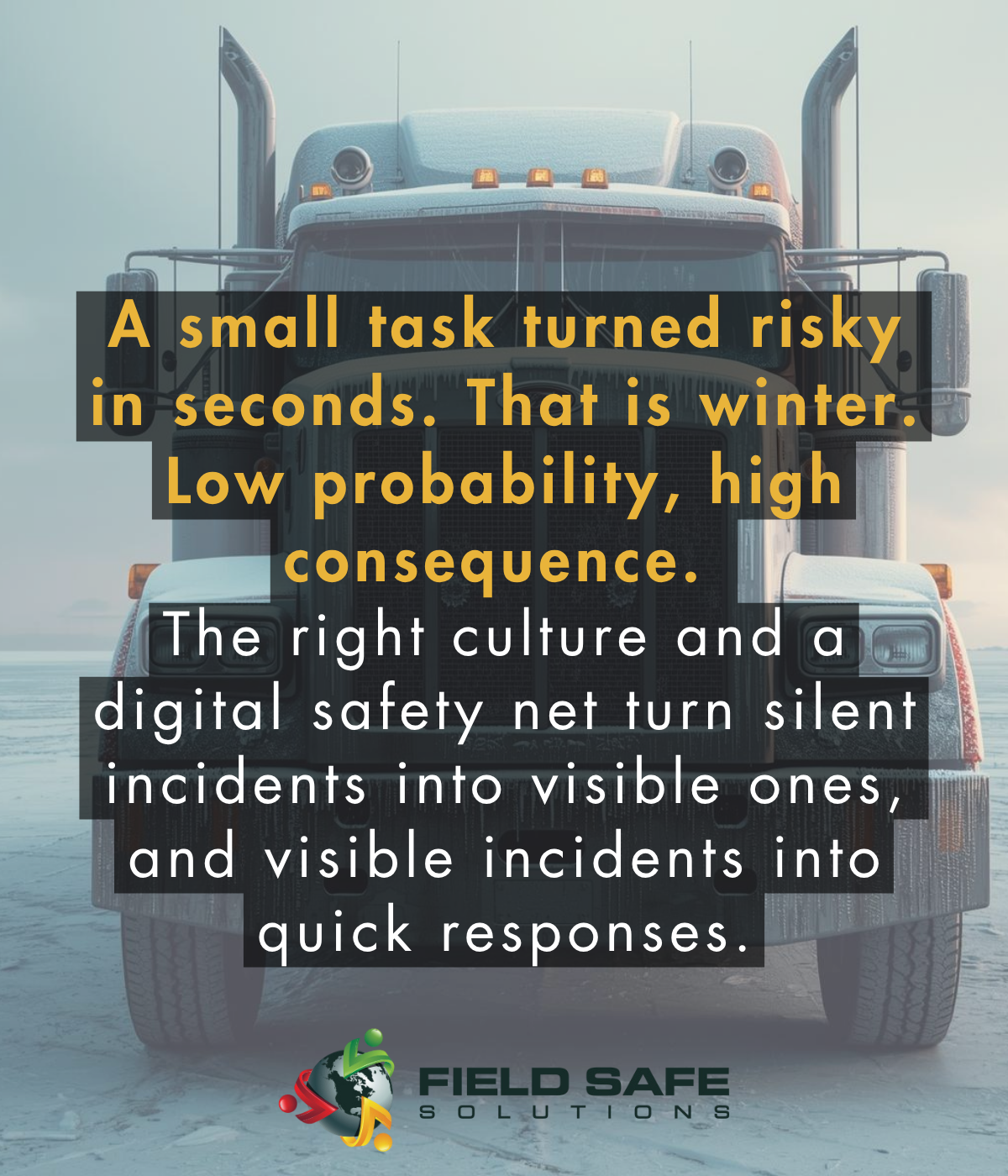
As winter settles in, remember how quickly a “two-minute task” can turn into a high-consequence event. The safest teams pair a strong safety culture with simple digital guardrails so minor problems are found fast and help gets there sooner.
If you’re ready to tighten discovery and response times for your lone and remote workers, let’s talk. We can walk you through practical use cases and show how Field Safe works. Request a Demo.